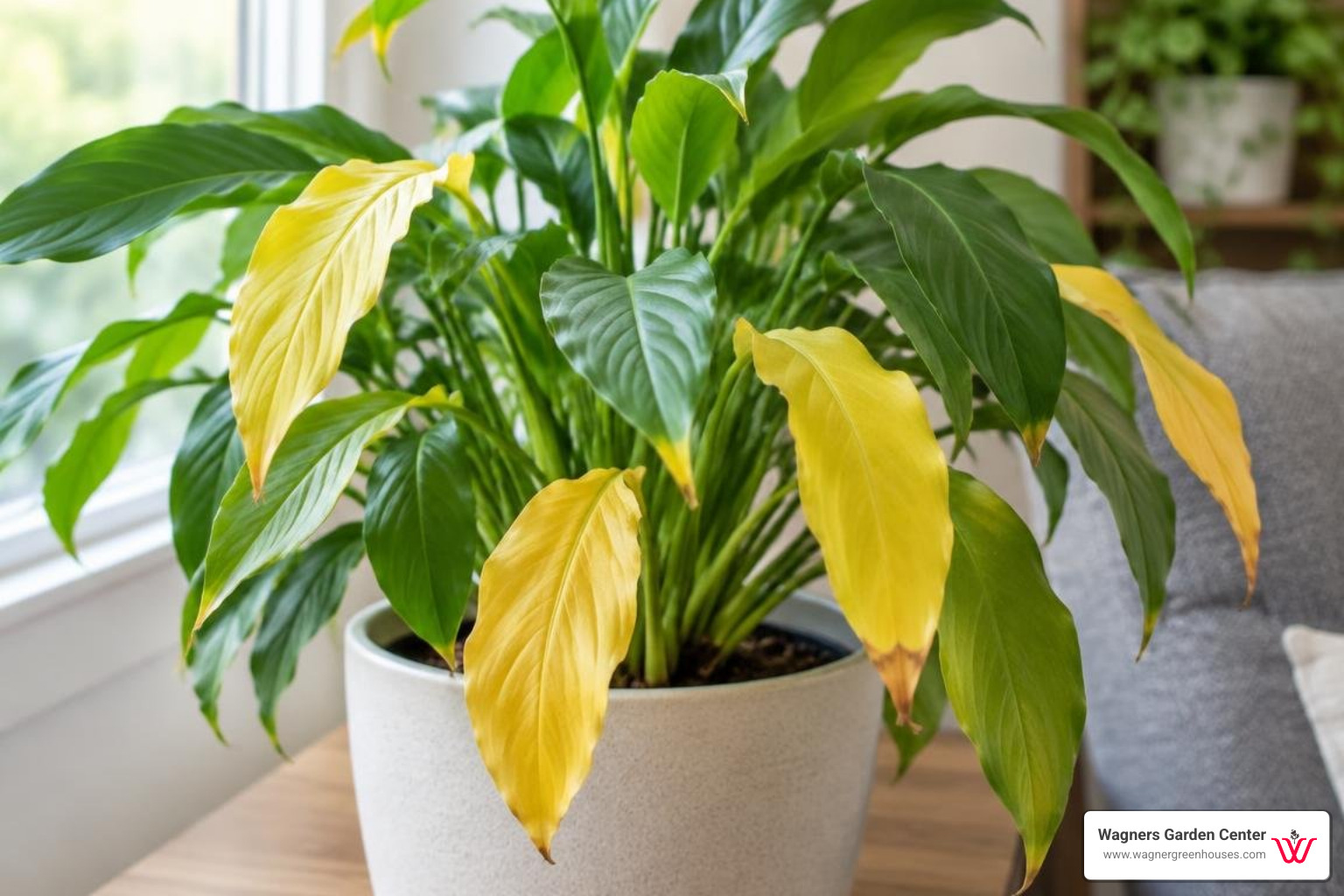
What Causes Yellow Leaves on Houseplants?
Start with the potting mix. Yellow leaves on houseplants often point to a watering problem, but they can also signal poor drainage, nutrient trouble, pests, low light, or normal leaf aging. Feel the potting mix before adding water or fertilizer: soggy mix calls for a closer look at drainage and roots, while very dry mix may mean the houseplant needs a thorough watering. Then note which leaves turned yellow first. That pattern helps narrow down the cause.
Leaf yellowing is called chlorosis when leaves have too little green chlorophyll. A few older leaves turning yellow as new ones grow may be normal. If yellowing spreads, use the clues below to find the cause before treating it.
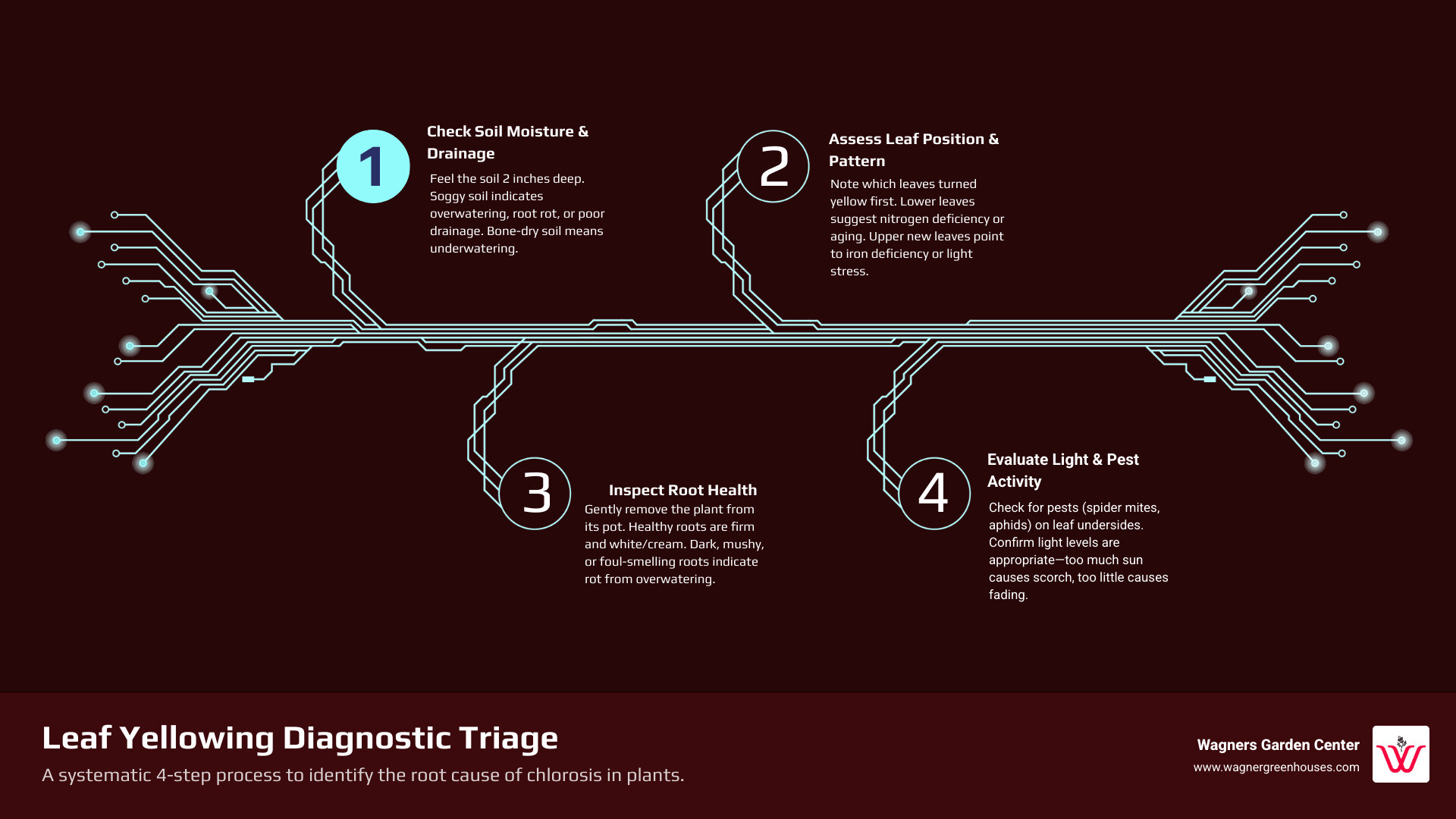
Chlorosis occurs when a houseplant cannot make enough chlorophyll, the green pigment that drives photosynthesis and food production. When this process slows, underlying yellow pigments become more visible. Finding the root cause means checking moisture, root health, nutrient availability, indoor light, and pest activity.
Watering and Root Problems That Cause Yellow Houseplant Leaves
Improper watering is one of the most common reasons houseplant leaves turn yellow. A pot that stays waterlogged has too little oxygen around the roots, so roots struggle to take up water and nutrients. The result can be pale leaves, wilting, and soft stems even though the potting mix is wet.
Underwatering can cause a different kind of stress. When the potting mix dries out completely, many houseplants shed older leaves to conserve moisture for new growth.
| Symptom / Feature | Overwatering | Underwatering |
|---|---|---|
| Potting Mix Feel | Consistently wet, heavy, muddy, or sour-smelling | Dry, dusty, cracked, or pulling away from the pot |
| Leaf Texture | Soft, limp, floppy, or mushy | Dry, papery, or crispy at the edges |
| Leaf Location | New and older leaves may yellow at the same time | Older, lower leaves often yellow and drop first |
| Other Clues | Mold on the mix, dark stems, or a musty odor | Wilting, curled leaves, or brown leaf tips |
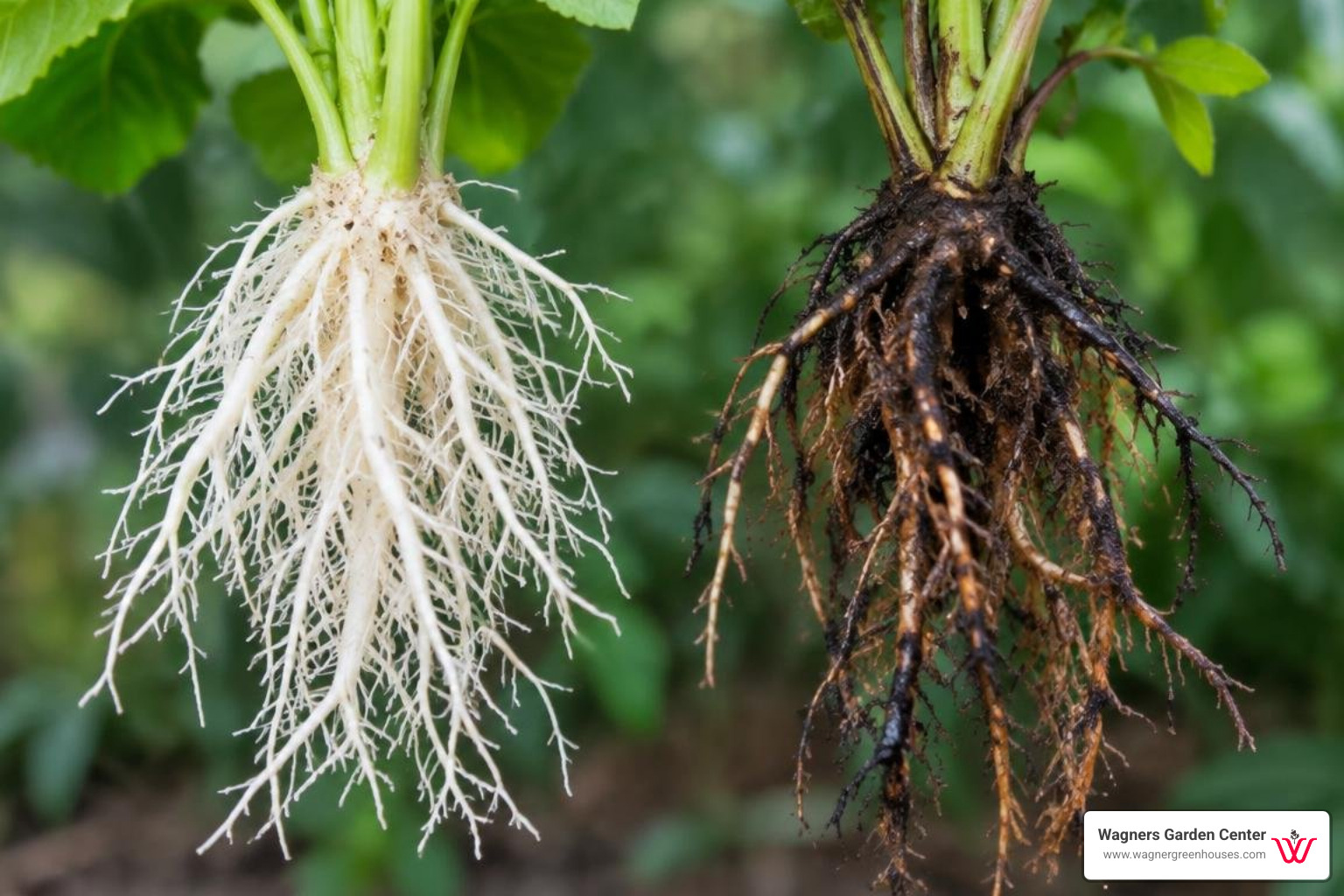
| Root Condition | Brown, black, slimy, soft, or sour-smelling | Pale, dry, shriveled, or brittle |
Overwatering vs. Underwatering: The Finger Test
A fixed calendar schedule rarely matches an indoor plant’s needs. Room temperature, humidity, pot size, season, and light levels all affect how quickly potting mix dries.
To check moisture, insert a finger about two inches into the potting mix:
- Damp and cool mix: Moisture is still present, so wait before watering.
- Soggy or muddy mix: Excess water is trapped. Empty the saucer and make sure the pot has an open drainage hole.
- Dry mix: Water slowly and thoroughly until excess drains from the bottom, then discard the water left in the saucer.
Houseplants with severe moisture stress may droop or look limp. Reviewing container care tips can help you choose the right potting mix and a pot with reliable drainage.
Checking Roots for Decay and Compaction
If the potting mix stays damp but the houseplant wilts and turns yellow, inspect the roots. Carefully slide the plant out of its pot and look at the root ball.
Healthy houseplant roots are firm, flexible, and usually white or light tan. Roots affected by decay often look dark, feel mushy, and have a sour odor. Trim away damaged roots with clean scissors, repot in fresh potting mix, and use a container with drainage.
A severely rootbound houseplant can also struggle to take up moisture and nutrients. If roots circle tightly around the pot, move the plant to a container only slightly larger.
Nutrient and Potting Mix Issues Behind Yellow Houseplant Leaves
When watering is on track, yellow houseplant leaves can point to a nutrient issue or potting mix that is no longer supporting healthy roots. Nutrients move through plants differently, so the location of yellowing offers a useful clue:
- Mobile nutrients, including nitrogen, potassium, and magnesium: A houseplant can move these nutrients from older leaves to new growth. Deficiency symptoms usually begin on older, lower leaves.
- Less-mobile nutrients, including iron and calcium: A houseplant cannot easily move these nutrients from older tissue. Symptoms are more likely to appear in the newest leaves first.
Potting mix pH affects whether roots can use nutrients already present in the mix. Most common houseplants do well in a slightly acidic potting mix. If the mix is very old, compacted, or affected by mineral buildup from tap water or frequent fertilizer use, nutrients can become harder for roots to absorb.
Reading Nutrient Patterns on Houseplant Leaves
Look at both the color pattern and the leaf’s position on the plant:
- Nitrogen deficiency: Older leaves become evenly pale yellow and growth may slow.
- Potassium deficiency: Older leaves can develop yellowing or browning around the edges.
- Iron deficiency: New leaves may yellow while the veins stay greener than the tissue between them.
Before adding fertilizer, rule out watering and root problems. The RHS guide on chlorosis in plants can help you assess yellowing patterns. Fertilizer will not correct yellowing caused by soggy roots, very dry potting mix, pests, or inadequate light. During active growth, follow balanced fertilizer applications and avoid fertilizing a stressed plant.
Telling Iron Deficiency from Magnesium Deficiency
Iron and magnesium deficiencies can both cause interveinal chlorosis, where leaf tissue turns yellow while the veins remain greener. The leaf position helps tell them apart:
- Iron deficiency: Usually appears on the youngest leaves and new growth first.
- Magnesium deficiency: Usually appears on older leaves first, because the plant can move magnesium to newer growth.
If this pattern persists after you improve watering and light, the Montana State University Extension guide on chlorosis offers more detail. Consider repotting a rootbound plant or refreshing exhausted potting mix. Wagners Garden Center can help you choose an appropriate potting mix and fertilizer for common houseplants.
Indoor Stress, Pests, and Disease That Yellow Houseplant Leaves
Beyond watering and nutrition, indoor growing conditions and pests can interfere with healthy green growth.
Sap-Sucking Pests and Leaf Problems
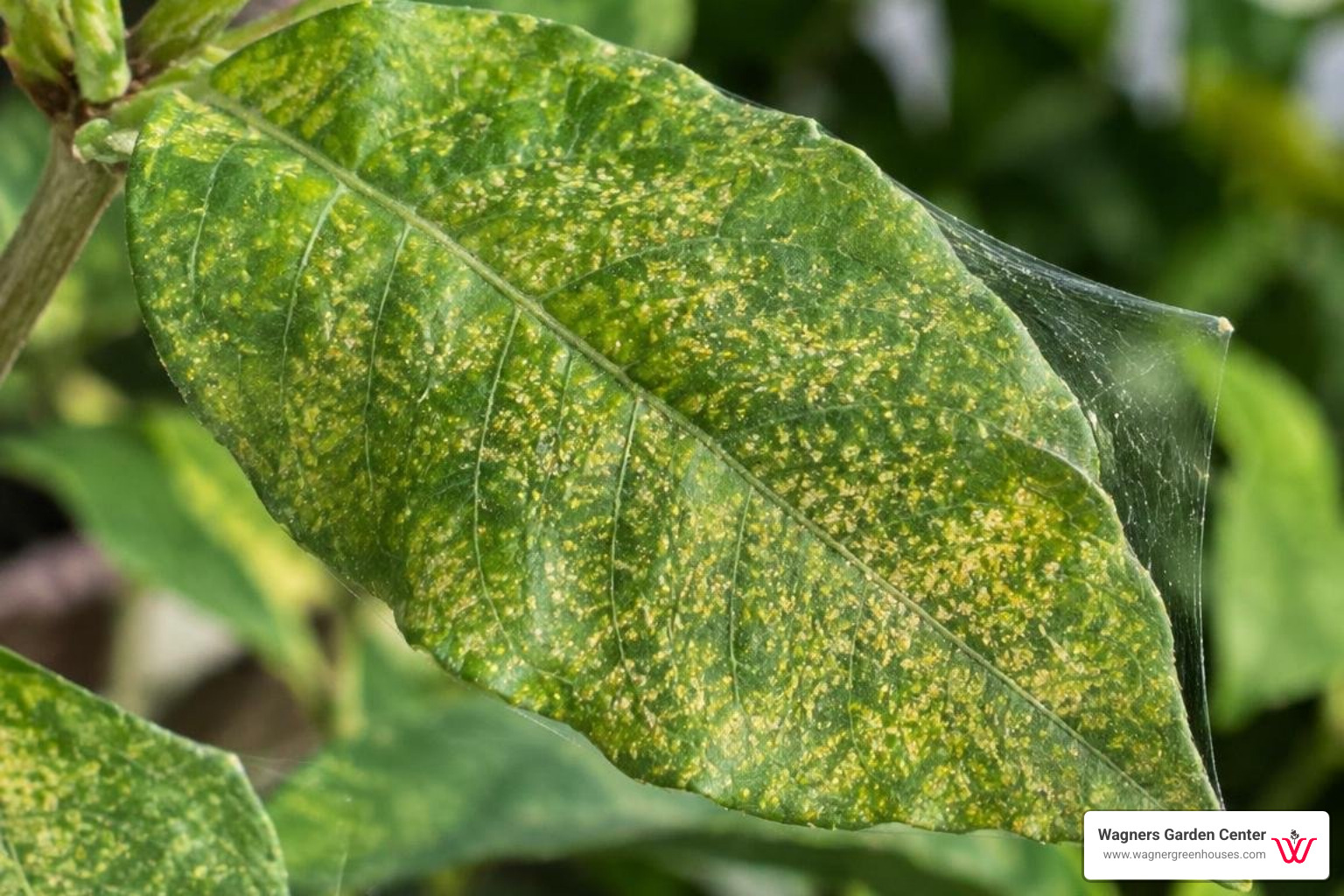
Small pests can damage leaf cells and cause yellow discoloration:
- Spider mites: Leave fine yellow stippling and webbing, especially on leaf undersides and around stems.
- Aphids, whiteflies, and scale: Gather on tender growth or leaf undersides, feeding on sap and sometimes leaving sticky residue.
Isolate an affected houseplant while you inspect it. Wipe pests from leaves, rinse the plant when appropriate for its care needs, and repeat treatment as needed. The University of Maryland Extension guide on indoor plant yellowing and the Wyoming Extension guide on managing plant diseases offer additional troubleshooting guidance. Persistent leaf spots, soft stems, or worsening yellowing can also point to a disease or root problem that needs prompt attention.
Temperature Shifts, Dry Air, and Light Problems
Houseplants can yellow after a sudden change in their indoor environment:
- Too much direct sun: Strong window light can bleach or scorch foliage, especially on plants that prefer bright indirect light.
- Too little light: A houseplant in a dim corner may shed older leaves because it cannot support them.
- Dry air, heating vents, and cold drafts: Winter heating can dry leaf edges, while cold glass, exterior doors, and air-conditioning vents can cause abrupt stress.
Keep plants away from direct blasts of hot or cold air, and rotate them gradually when moving them to a brighter location. Indoor plant care practices can help you match light and watering routines to the houseplants in your home.
Step-by-Step: How to Treat Yellow Houseplant Leaves
When houseplant leaves start yellowing, work through these checks before adding fertilizer or changing several care habits at once:
- Check the potting mix: Use the finger test. Adjust watering and confirm the pot has an open drainage hole.
- Note which leaves are yellow: Older lower leaves may suggest normal aging, underwatering, or a mobile nutrient issue. Yellow new growth may point to light, iron, or root problems.
- Inspect for pests: Check leaf undersides, stems, and leaf joints for webbing, sticky residue, scale, or tiny insects.
- Review light and airflow: Move the plant away from harsh sun, deep shade, heating vents, and cold drafts.
- Inspect the roots if symptoms continue: Root rot, compacted mix, and a rootbound pot can keep a houseplant from taking up moisture and nutrients.
When Yellow Houseplant Leaves Are Normal
Not every yellow leaf signals a problem. Many houseplants naturally shed their oldest leaves as they mature. If a pothos, philodendron, dracaena, or similar plant is producing healthy new growth and only an occasional lower leaf turns yellow, normal aging may be the cause.
A recently repotted or relocated houseplant may also drop a few leaves while it adjusts to new light, temperature, or moisture conditions.
Pruning, Recovery, and Repotting
Leaves that have turned fully yellow or brown generally will not turn green again. Remove them near the main stem with clean, sanitized pruners. This improves the plant’s appearance and lets you monitor whether new yellowing is still developing.
If the plant is rootbound or its potting mix is compacted and slow to drain, repot it into a container only one to two inches wider. Choose pots and planters with proper drainage and fresh, well-aerated potting mix suited to houseplants.
Frequently Asked Questions About Yellow Houseplant Leaves
Can yellow houseplant leaves turn green again?
Leaves that have turned completely pale yellow or brown generally will not regain their green color. However, mild yellowing can stop from spreading once you correct the underlying issue, such as watering, light, pests, or nutrient availability. Healthy new growth is the clearest sign that the houseplant is recovering.
Should I fertilize a houseplant when its leaves turn yellow?
Not right away. Fertilizer can worsen stress when a houseplant has root rot, very dry potting mix, pest damage, or inadequate light. First check moisture, roots, pests, and lighting. If the plant is otherwise healthy and actively growing, use a houseplant fertilizer according to its label directions.
Why are the bottom leaves on my houseplant turning yellow?
Lower leaves often turn yellow because of normal aging, underwatering, low light, or a mobile nutrient deficiency. If only the oldest leaves are affected and the plant is producing healthy new growth, watch the plant before making major changes. If yellowing spreads quickly, check the potting mix and roots.
Restoring Healthy Green Growth to Your Houseplants
Yellow leaves are a useful signal that a houseplant needs an adjustment in its indoor environment. By checking potting mix moisture, noting which leaves change color first, inspecting the roots, and looking for pests, you can narrow down the cause and support healthy new growth.
For help choosing fresh potting mix, a container with drainage, fertilizer, or a new houseplant for your space, visit Wagners Garden Center in Minneapolis or Hugo. The team can help you match indoor plants and care supplies to your home’s light and growing conditions.