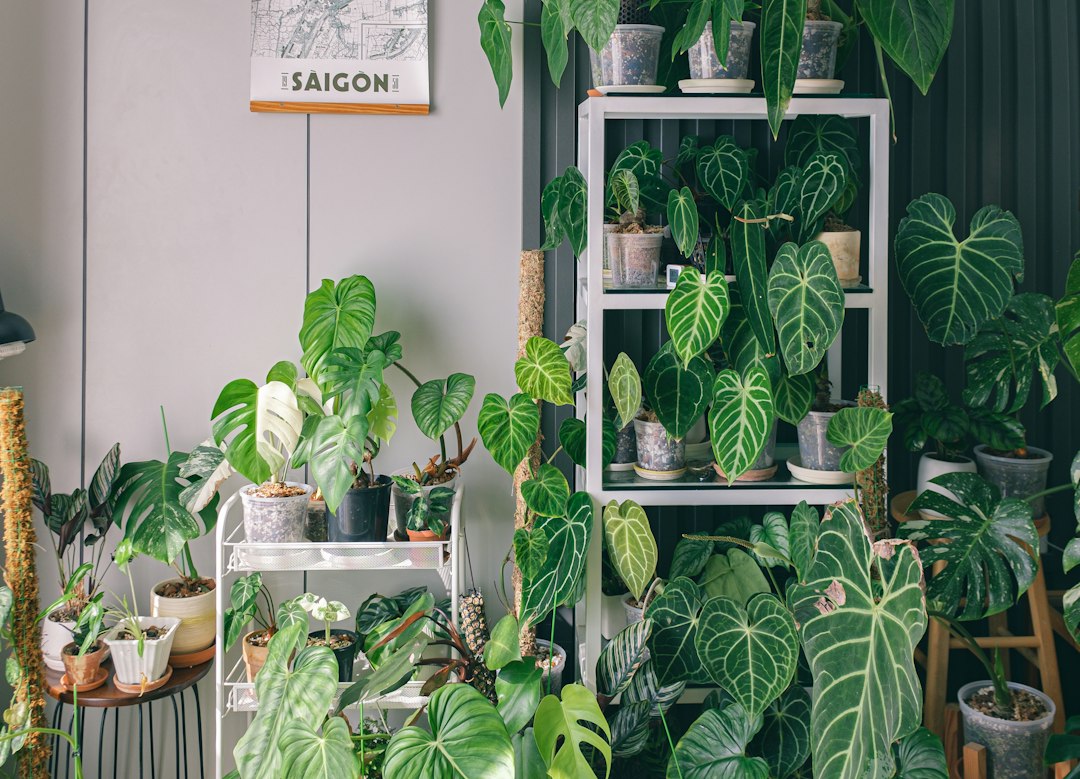
10 Air Purifying Plants Worth Considering
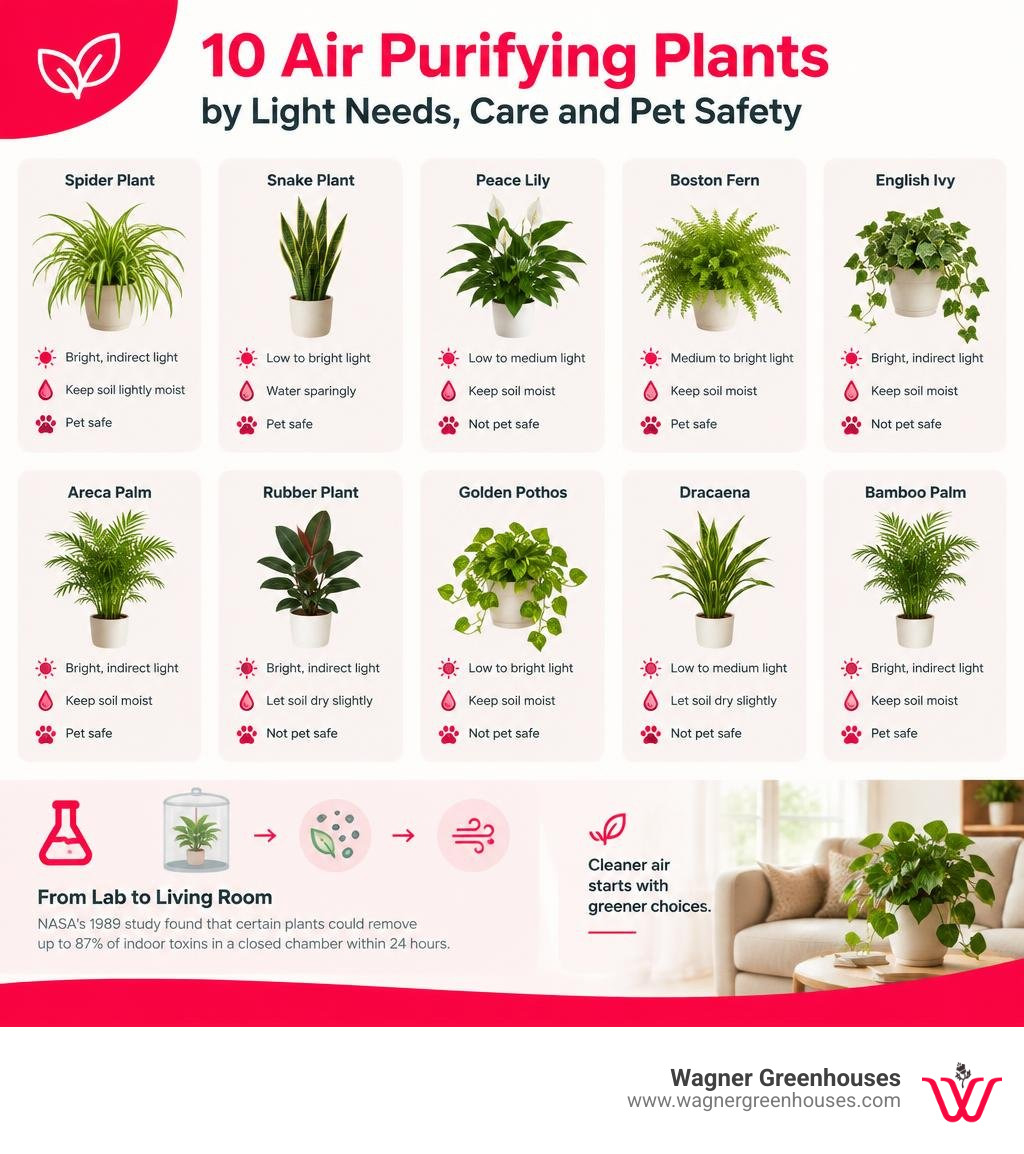
Start with these 10 air purifying plants: spider plant, snake plant, peace lily, Boston fern, English ivy, areca palm, rubber plant, golden pothos, dracaena, and bamboo palm. All have been studied for removing indoor chemicals under controlled conditions. For an additional overview of popular options, see this guide to air-purifying houseplants. If you have cats or dogs, spider plant, Boston fern, and areca palm are the safer picks on this list.
For Minnesota homes, especially as colder weather keeps windows closed, plants can make indoor spaces feel greener and more comfortable, but they support a fresh, well-ventilated home rather than replace ventilation or source control. This guide differs from Wagners’ existing top 10 air-purifying houseplants overview by helping readers compare pet safety, care demands, light levels, and practical placement for winter living. Lab tests show that plants can remove pollutants such as formaldehyde and benzene. In a typical home, a few plants are unlikely to make a measurable difference in air quality. Choose plants that fit your light and care routine first.
Wagners Garden Center draws on generations of horticultural experience to help Minnesota plant owners choose among these 10 air-purifying plants by care needs, room conditions, and pet safety.
Plant Air Purification Science: NASA Chamber Studies vs. Real-World Homes
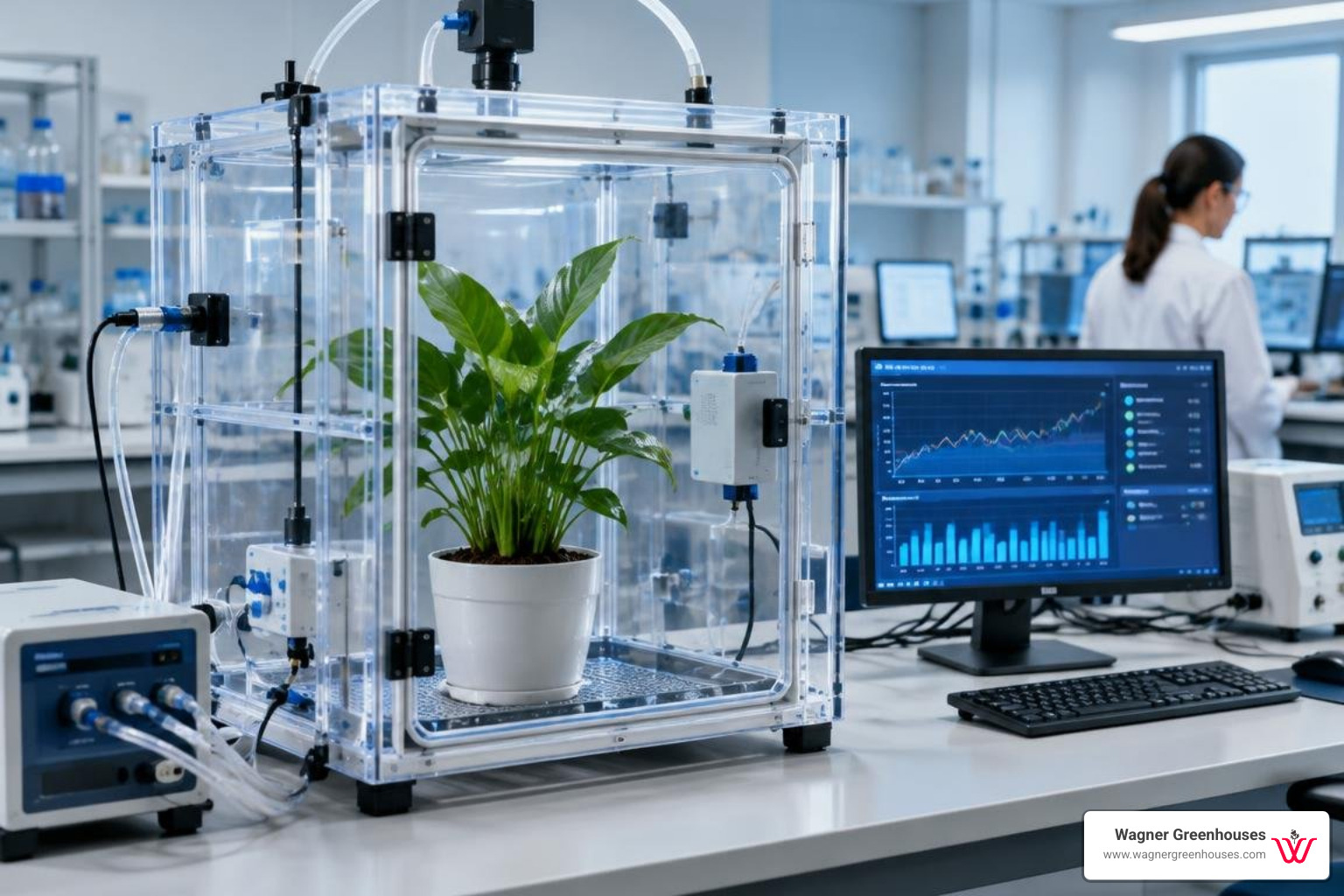
To make the best choices for your home in 2026, it helps to understand where the idea of “air-cleaning plants” originated. Much of the enthusiasm traces back to the famous 1989 NASA Clean Air Study. NASA researchers placed various potted plants inside sealed, airtight plexiglass chambers to see if they could scrub volatile organic compounds (VOCs) out of closed environments like space stations.
The laboratory findings were impressive: within a single 24-hour window, the leaves and root microbiomes of certain plants removed up to 87% of indoor toxins like formaldehyde, benzene, and trichloroethylene. According to the EPA, levels of indoor VOCs—off-gassed by everyday items like furniture, paint, carpets, and cleaning supplies—can be up to ten times higher than outdoor levels. It was tempting to believe that bringing a single plant home would immediately fix indoor air quality.
However, a modern living room is not a sealed space capsule. A comprehensive 2019 review published in the Journal of Exposure Science & Environmental Epidemiology re-evaluated decades of chamber studies through the lens of modern building ventilation. Researchers determined that natural air exchange in standard homes dissipates VOCs far faster than potted greenery can metabolize them. In fact, to replicate the rate of typical outdoor air exchange through potted greenery alone, you would need anywhere from 10 to 1,000 plants per square meter of floor space (or roughly 100 to 1,000 plants per 10 square feet).
Furthermore, foliage primarily interacts with gaseous chemical compounds rather than airborne particles such as dust, pollen, mold spores, and pet dander.
Does this mean indoor greenery is useless? Absolutely not. While plants are not a 1:1 substitute for good ventilation, scientific literature underscores that they are houseplants that offer more than just decor. A landmark 2008 study in India demonstrated that introducing living plants into indoor work environments resulted in a 24% reduction in headaches, a 52% reduction in eye irritation, a 34% decrease in respiratory issues, and a 12% improvement in overall lung capacity. Greenery acts as a natural biome balancer, gently humidifying dry air and creating a calming living space.
The 10 Air Purifying Plants to Transform Your Indoor Environment
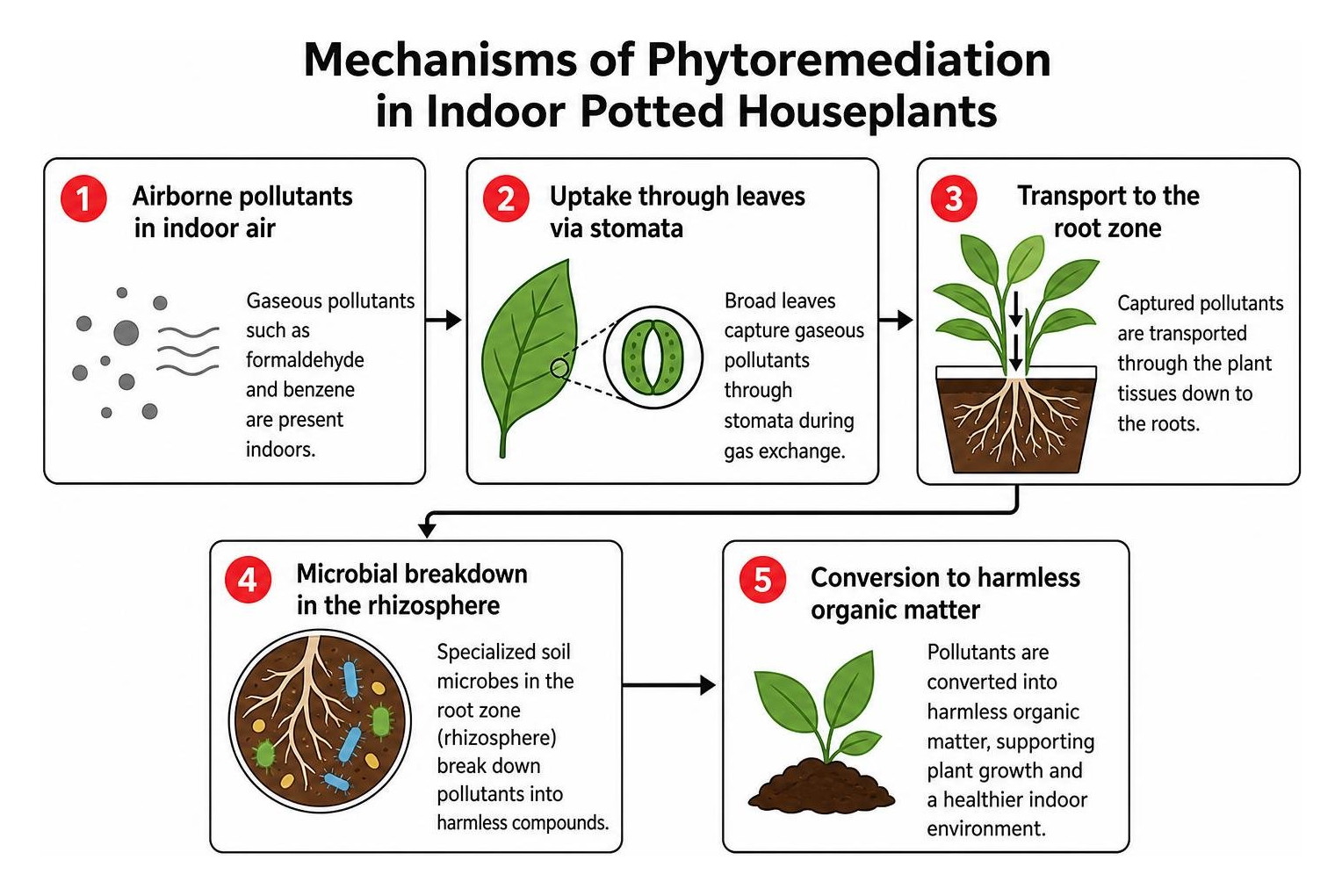
Potted plants remove airborne chemicals through a biological process known as phytoremediation. The broad leaves capture gaseous pollutants through microscopic pores called stomata during gas exchange. From there, plants move these substances down into their root zone (the rhizosphere), where specialized soil microbes break the compounds down into harmless organic matter.
Simultaneously, indoor plants release clean moisture into the air through transpiration and produce oxygen, actively improving personal well-being.
Top 10 Air Purifying Plants Ranked for Beginners, Pets, and Low Light

1. Snake Plant (Sansevieria trifasciata)
Often nicknamed “mother-in-law’s tongue” due to its sharp, upright foliage, the snake plant is nearly indestructible. It handles dark corners and neglected watering schedules with ease. Unique among most indoor greenery, it utilizes Crassulacean Acid Metabolism (CAM photosynthesis), absorbing carbon dioxide and releasing fresh oxygen during the night rather than the daytime. This makes it a popular bedside companion. That its leaves contain saponins, which are toxic if chewed by pets.
2. Spider Plant (Chlorophytum comosum)
Spider plants are one of the most resilient, pet-safe options you can grow. They produce arching, variegated foliage that quickly sends out runner stems with miniature plantlets (or “pups”) ready for easy propagation. One mature spider plant can provide vibrant foliage that easily brightens a 200-square-foot room. They thrive in hanging baskets and effectively capture indoor formaldehyde and carbon monoxide.
3. Peace Lily (Spathiphyllum spp.)
If you want elegant blooms alongside lush greenery, the peace lily is a standout multitasker. It excels at filtering acetone, alcohols, trichloroethylene, and benzene. Peace lilies are famously communicative: when they run dry, their glossy leaves dramatically wilt, rebounding within hours of watering. They thrive in lower light, but contain insoluble calcium oxalates, meaning they should be placed safely out of reach of curious pets. For more flowering selections, explore Wagners’ favorite blooming indoor plants.
4. Boston Fern (Nephrolepis exaltata)
Popular since the Victorian era, the Boston fern is a lush humidity engine. In addition to targeting formaldehyde and xylene, it transpires moisture at a rapid rate, acting as a natural humidifier that can soothe winter-dry skin and sinuses. It is fully non-toxic to cats and dogs. Boston ferns prefer cool, indirect light and frequent misting, making them ideal for bright bathrooms.
5. English Ivy (Hedera helix)
English ivy is a classic trailing vine that looks stunning on shelves or in hanging planters. Studies show its dense canopy helps trap fine airborne particles and reduces airborne fungal spores. Because it prefers cooler room temperatures and medium light, it adapts well to home offices. However, it is toxic to pets and can cause skin irritation in sensitive individuals.
6. Areca Palm (Dypsis lutescens)
If you need a bold, pet-safe statement plant for an empty living room corner, the areca palm is a fantastic choice. A mature specimen can add up to a quart of water vapor per day to your home’s air, raising dry indoor humidity levels naturally. It excels at breaking down benzene and formaldehyde. Provide it with bright, filtered light and water when the top surface of the soil feels dry.
7. Rubber Plant (Ficus elastica)
Bred for toughness, the rubber plant features thick, leathery, dark-green leaves designed to capture maximum light. It removes chemical off-gassing from furniture and floor finishes while anchoring large rooms with dramatic height. It tolerates lower light levels better than many other ficus varieties, though direct afternoon sun can scorch its broad foliage. Keep it away from pets due to its mildly irritating milky sap.
8. Golden Pothos (Epipremnum aureum)
Also known as “devil’s ivy” because it is nearly impossible to kill, pothos is the quintessential beginner houseplant. Its trailing heart-shaped leaves adapt to almost any lighting condition, from dim offices to sunny windowsills (the variegation patterns on its leaves will tell you if it needs more light). It is a top performer for absorbing formaldehyde, benzene, and toluene. If you love hardy trailing varieties, discover green indoor plants that deliver lush, forgiving growth.
9. Dracaena (Dracaena fragrans & Dracaena marginata)
Available in upright tree forms like ‘Janet Craig’ or the ribbon-edged Madagascar dragon tree, Dracaena varieties bounce back from underwatering and remove a wide spectrum of solvents including trichloroethylene, benzene, and formaldehyde. They prefer moderate indirect light and well-draining soil. Dracaena species are toxic to cats and dogs if ingested.
10. Bamboo Palm (Chamaedorea seifrizii)
The bamboo palm adds an elegant, tropical canopy to low-light interiors while filtering formaldehyde, benzene, and carbon monoxide. Reaching heights of four to eight feet indoors, it serves as a natural interior acoustic buffer while remaining completely non-toxic to household animals. Keep the soil evenly moist and wipe the broad fronds occasionally to prevent dust accumulation.
Looking for more functional greenery? Consider adding aloe vera and other great houseplants to your collection for skin-soothing benefits and nighttime oxygen exchange.
Optimizing Your Indoor Air: Placement, Care, and Ventilation Strategies
To get the most out of your indoor greenery, treat your plants as one part of a broader home wellness strategy. Combining plants with healthy airflow creates a fresher, more comfortable living space.
Room-by-Room Plant Selection and Lighting
Matching plant species to the microclimates of your home ensures healthy growth and maximizes benefits:
- Bedrooms: Choose species that employ nighttime CAM photosynthesis to release oxygen while you sleep. The snake plant is ideal for low-light bedroom corners, while a pet-friendly spider plant thrives on a sunny dresser.
- Bathrooms: High humidity and fluctuating temperatures make bathrooms ideal for Boston ferns and English ivy. Both species thrive on shower steam and help reduce airborne humidity swings.
- Home Offices: A desktop golden pothos or compact Dracaena helps dampen ambient background noise, boosts humidity around electronic workstations, and reduces eye strain.
- Living Rooms: Fill open, well-lit living spaces with structural varieties like the areca palm, bamboo palm, or rubber tree. You can naturally amplify their micro-climate benefits by grouping houseplants for higher humidity together on decorative plant stands or pebble trays.
Complementing Houseplants with Ventilation and Source Control
While cultivating an indoor jungle is rewarding, plants work best alongside active indoor air management:
- Prioritize Fresh Air Exchange: Open windows for 10–15 minutes daily to flush out trapped VOCs, cooking fumes, and stale carbon dioxide.
- Control Pollution at the Source: Choose low-VOC paints, switch to fragrance-free cleaning products, and ensure your gas appliances and kitchen hoods vent outside.
- Keep Leaves Clean: Dust your houseplants’ foliage every couple of weeks with a damp cloth. Clean stomata allow plants to photosynthesize, transpire, and metabolize VOCs efficiently.
Frequently Asked Questions About Air Purifying Plants
Can houseplants replace regular ventilation?
No. Houseplants absorb certain chemical gases over time, but they cannot match the rapid volumetric air exchange provided by open windows, exhaust fans, or HVAC systems. Treat your indoor plants as a complementary wellness tool that enhances humidity, aesthetics, and mental well-being alongside proper ventilation.
Which air-purifying houseplants are completely non-toxic to cats and dogs?
The safest choices in this guide are the spider plant, Boston fern, areca palm, and bamboo palm. These species do not contain toxic saponins or insoluble calcium oxalate crystals, making them safe for curious pets.
How many plants are realistically needed to improve indoor air quality?
Chamber-based extrapolation models suggest you would need between 10 and 1,000 plants per square meter to match mechanical air exchange. However, placing 2 to 4 healthy potted plants in an average 200-square-foot room will noticeably improve humidity, soften acoustics, and enhance room comfort.
Conclusion
Creating a vibrant, leafy home environment is one of the easiest ways to bring the restorative benefits of nature indoors. While no houseplant can replace fresh outdoor air, the right balance of greenery enhances humidity, reduces daily stress, and enlivens your living space.
With more than a century of multi-generational horticultural expertise, Wagners Garden Center can help Minnesota plant owners find healthy, beautiful options for every space. Ready to build an indoor oasis before winter arrives? Shop indoor plants online, visit a Wagners garden center in Minneapolis or Hugo, or contact the team for current plant availability, products, hours, and personalized guidance. For a shorter, care-tip-focused roundup, see Wagners’ top 10 air-purifying houseplants.