Protect Your Fall Garden Before the Next Freeze
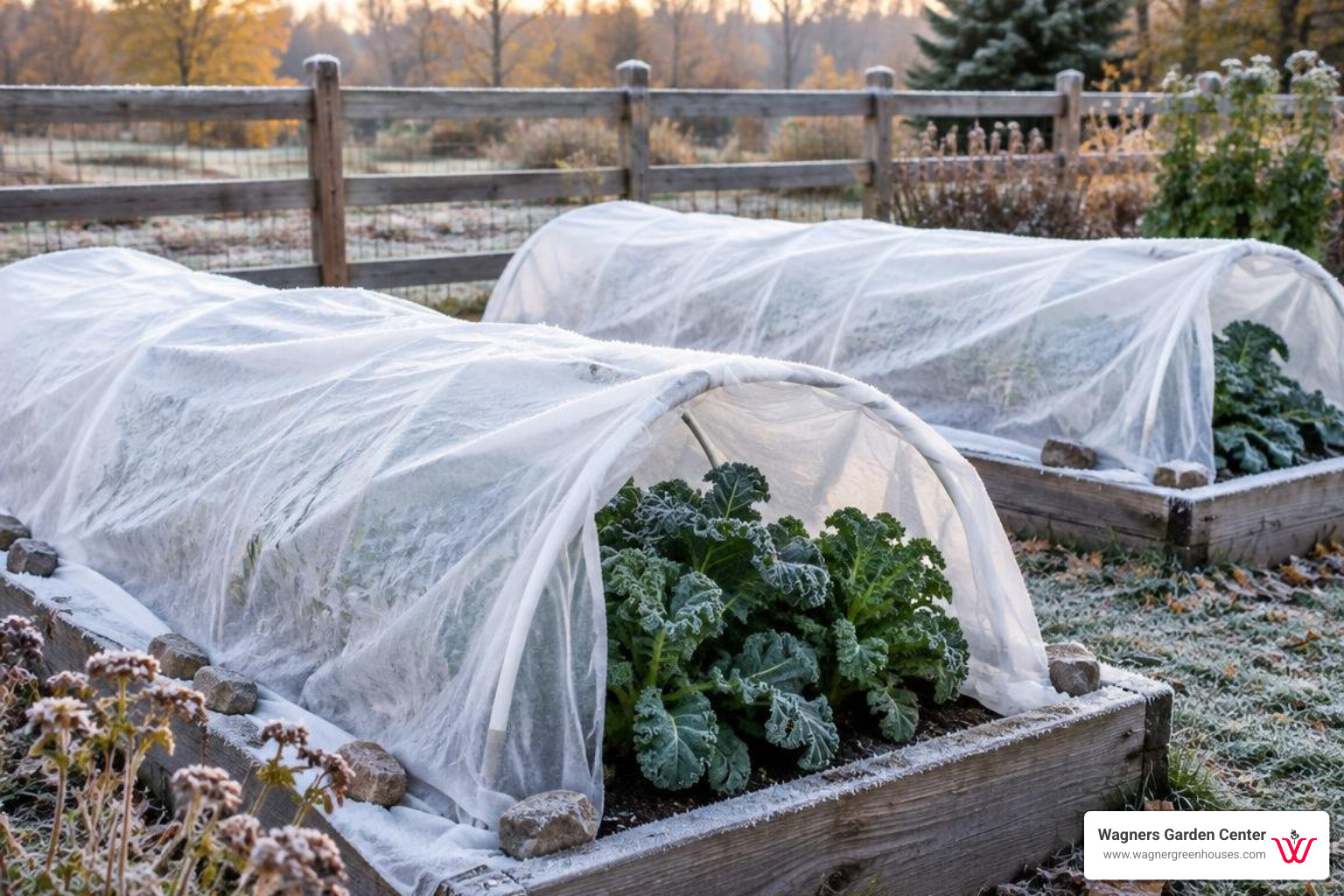
For fall garden planting in Minneapolis and Hugo, the next step is to protect what is already growing. If freezing weather is forecast this week, harvest tomatoes, peppers, basil, and other tender crops first. Secure row covers over greens, add mulch around root crops, and check that the soil is moist but not soggy before temperatures drop.
You can leave hardy crops such as kale and collards in place through a light frost. Carrots and other roots have some protection from the soil, but harvest them before the ground freezes if you cannot keep the bed insulated. Check the local forecast each night: a light frost and a prolonged hard freeze call for different levels of protection.
Understanding Frost Timelines and Freeze Thresholds in Minnesota
When late autumn arrives in the Twin Cities metro area, overnight temperatures can shift rapidly from crisp autumn evenings to damaging sub-freezing lows. Managing a late-season garden successfully starts with understanding the critical temperature thresholds that govern plant biology.
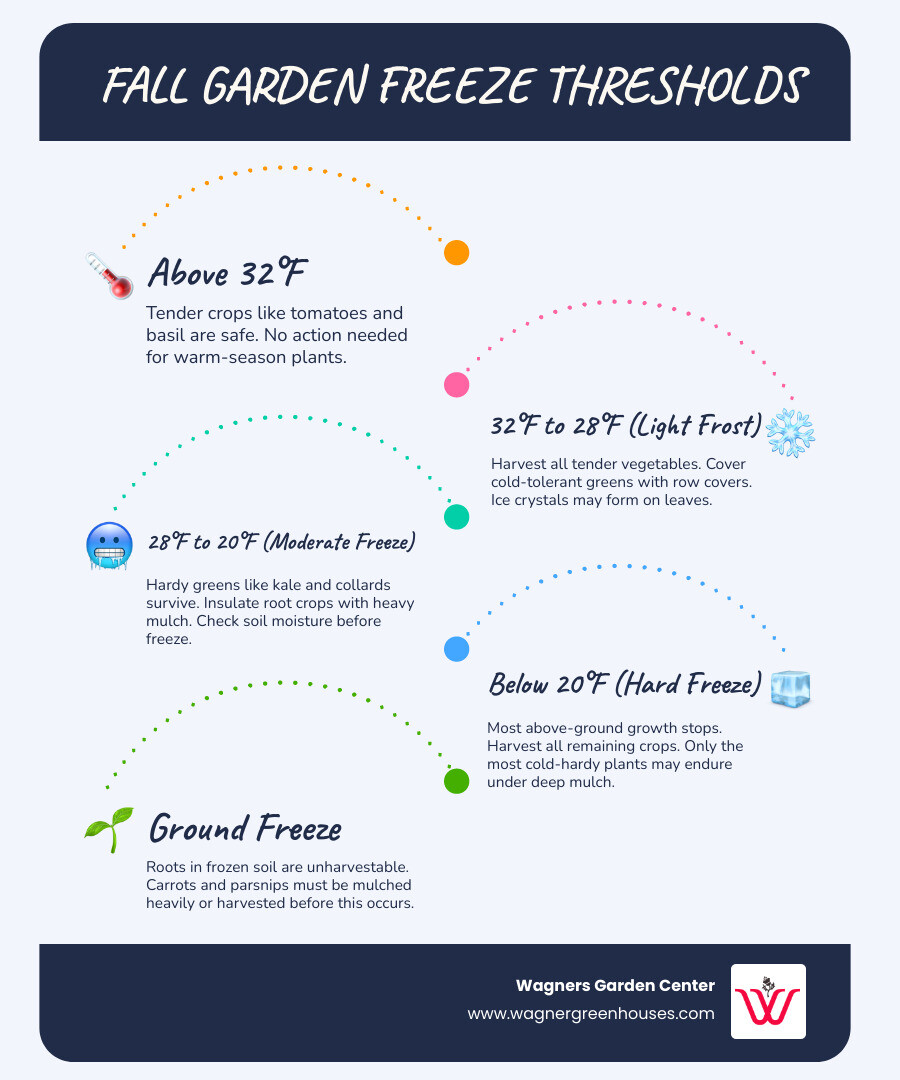
A light frost typically occurs when ambient air temperatures hover between 32°F and 28°F. During a light frost, ice crystals form on exposed leaves, quickly damaging warm-season plants like tomatoes, peppers, and basil. However, cool-season vegetables can tolerate these temperatures with minimal stress.
A hard freeze occurs when temperatures dip below 28°F for several consecutive hours. At this stage, cellular fluids within tender plant tissues freeze solid, expanding and rupturing plant cell walls. Most fall vegetables will tolerate temperatures down to 28 degrees without significant damage, but when readings drop toward the 20°F mark, even cold-adapted varieties require active intervention.
Compounding these temperature drops is the late-season daylight reduction. As day length shortens to less than ten hours, vegetable metabolic rates slow substantially, limiting their ability to recover from severe tissue damage. According to research on cool-season crop performance, warm days paired with cool nights create ideal conditions for a second round of cool-season vegetables, which are often more flavorful than a spring crop of the same species. Understanding your specific crops’ cold tolerance allows you to act before the frost turns productive rows into wilted foliage.
Assessing Cold Hardiness in Fall Garden Planting Vegetables
Vegetables handle freezing conditions differently based on their internal sugar concentrations and cell structures. The table below outlines how common garden crops respond to declining autumn temperatures.
| Crop Category | Specific Vegetables | Freeze Tolerance Threshold | Expected Plant Behavior Below Threshold |
|---|---|---|---|
| Tender Crops | Tomatoes, Peppers, Eggplants, Squash, Basil, Beans | 32°F (0°C) | Total collapse of foliage and stems; fruit softens, bruises, and decays rapidly. |
| Semi-Hardy Crops | Lettuce, Swiss Chard, Beets, Carrots, Asian Greens | 28°F to 25°F (-2°C to -4°C) | Outer leaves show water-soaked damage; root crops remain protected beneath the soil line. |
| Hardy Brassicas | Kale, Collards, Cabbage, Brussels Sprouts, Broccoli | 20°F to 15°F (-7°C to -9°C) | Stems and leaves freeze stiff but thaw intact; frost enhances flavor by converting starches to sugars. |
| Cold-Hardy Greens & Alliums | Spinach, Scallions, Garlic (roots established) | Below 15°F (-9°C) with mulch | Survives deep freezes under snow cover or fabric; resumes vigorous growth in early spring. |
Hardy brassicas possess impressive natural endurance. Cabbage will keep thriving through frosts and temperatures as low as 20 degrees, while broccoli is very tolerant of cold temperatures and will survive many hard frosts. Spinach can survive temperatures well below freezing if the plant has developed to a mature size before extreme cold arrives.
Identifying Frost-Sensitive vs. Cold-Tolerant Crops
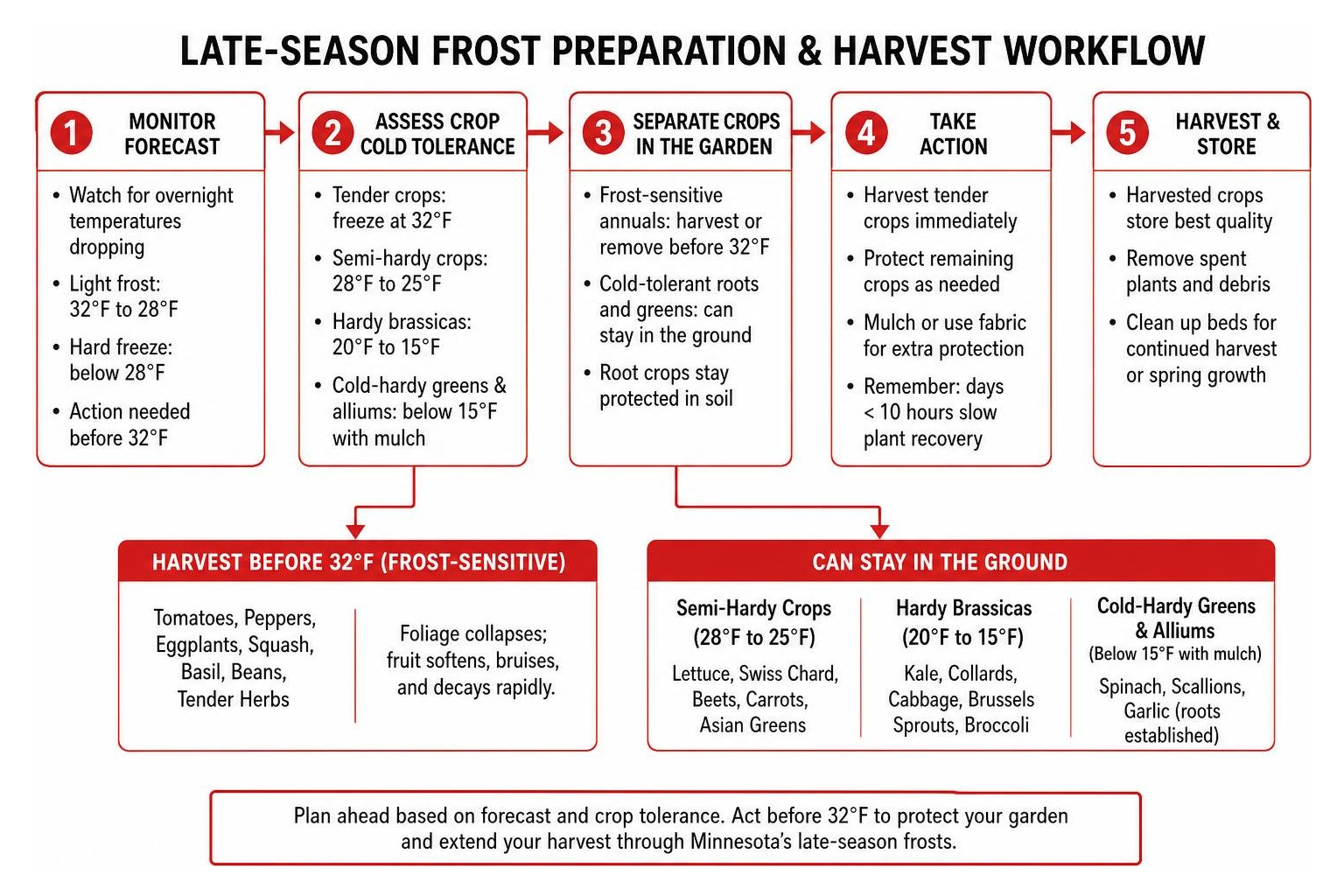
To manage an imminent freeze, walk your garden beds and divide crops into two distinct groups: those that must be rescued immediately, and those that can safely stay in the ground.
- Frost-Sensitive Annuals: Any lingering warm-season annuals must be cleared or harvested prior to the mercury hitting 32°F. Summer squash, cucumbers, slicing tomatoes, and tender herbs will blacken overnight.
- Cold-Tolerant Roots and Greens: Root crops benefit from the natural thermal mass of the surrounding earth. Carrots, parsnips, turnips, and daikon radishes can remain in the soil well past the first hard freeze, as the soil temperature drops much more slowly than ambient air. Reviewing essential fall gardening tips helps you structure your daily garden chores as freezing weather moves into the region.
Immediate Action Plan: What to Harvest Before Freezing Weather Hits
When local freeze warnings are issued, immediate action preserves the value of your late-season edible crops.
Rescuing Tender Vegetables and Warm-Season Residuals
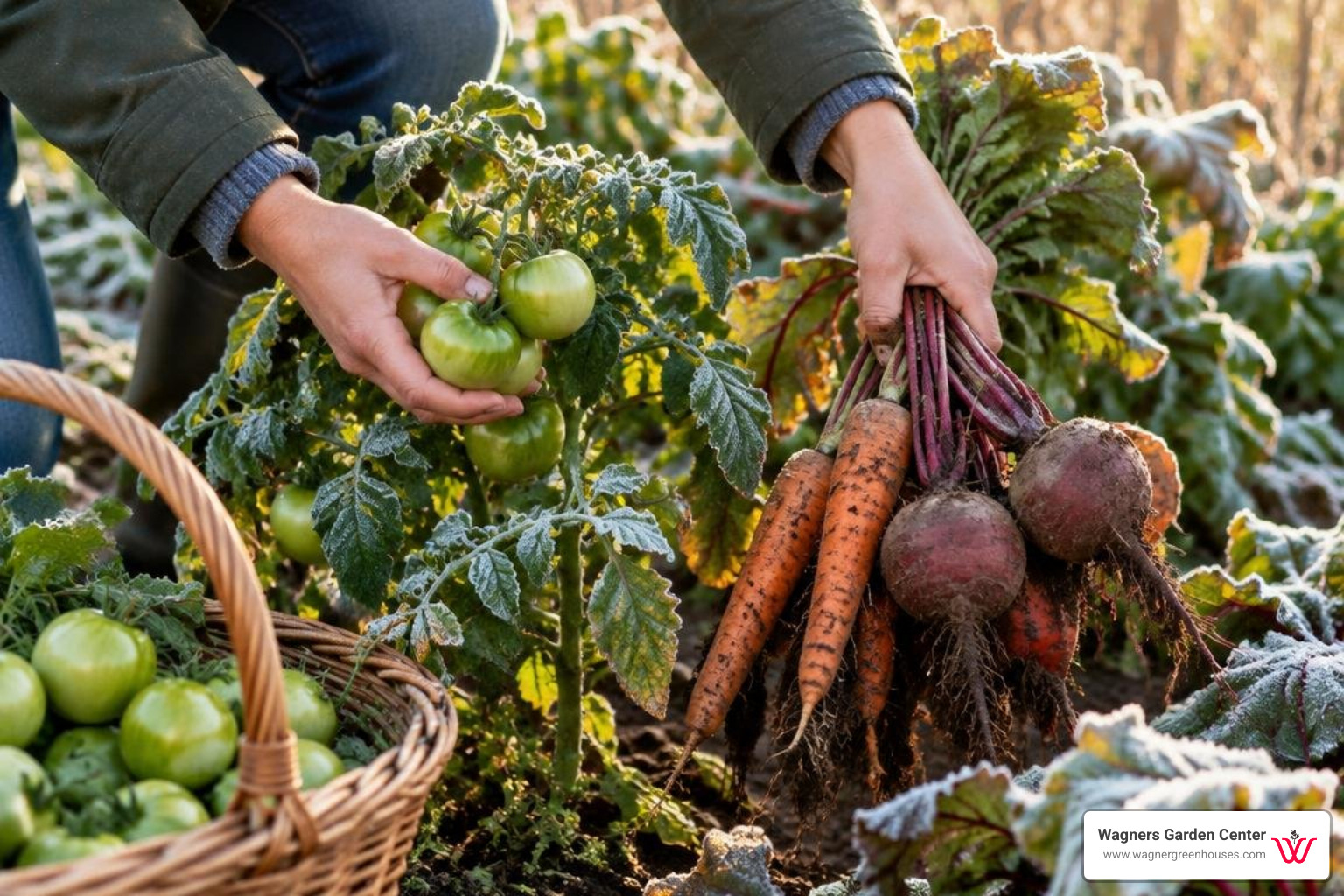
Before the first sub-32°F night, prioritize picking every usable fruit from tender, warm-season plants:
- Green and Blushing Tomatoes: Pick all tomatoes showing any sign of color break, as well as full-sized green fruits. Store them indoors at room temperature in a single layer out of direct sunlight to ripen.
- Peppers and Eggplants: Harvest mature and immature pods alike. Cold temperatures quickly cause soft spots and skin pitting on pepper walls.
- Bush Beans and Pole Beans: Strip the remaining pods from the vines. Bean pods turn mushy after a freeze, compromising texture and shelf life.
- Tender Herbs: Cut down entire stands of basil, cilantro, and dill. Freeze basil leaves in olive oil or dry them indoors, as basil wilts at the slightest touch of 32°F frost.
- Winter Squash and Pumpkins: Clip mature squash from the vines, leaving a two-inch stem attached. Cure them in a warm, dry spot indoors for 10 to 14 days to harden their rinds for long-term winter storage.
Knowing When to Leave Frost-Enhanced Greens and Roots
Do not rush to clear your cool-season crops. Many late-season greens and root vegetables actually improve after exposure to light freezing conditions.
As temperatures decline, cold-hardy plants produce natural sugars (primarily glucose and sucrose) within their cells. These concentrated sugars act like a natural antifreeze, depressing the freezing point of the plant’s internal water. This physiological shift significantly alters taste:
- Kale and Collards: Kale leaves are sweeter when they mature in cooler weather, as frost enhances their flavor. Collards are among the most cold-hardy vegetables, with leaf quality and tenderness improving following a freeze.
- Brussels Sprouts: Brussels sprouts easily survive freezing temperatures and light snow, converting bitter compounds into complex sugars.
- Root Crops: Carrots, beets, turnips, radishes, and parsnips remain insulated by the soil. According to MSU Extension frost protection research, root crops can be dug and enjoyed anytime before the surrounding ground freezes solid.
Protective Tactics for Fall Garden Planting Beds Ahead of Hard Frost
For crops you choose to leave in the ground, setting up physical barriers and optimizing soil moisture will keep plants productive through repeated freeze-thaw cycles.
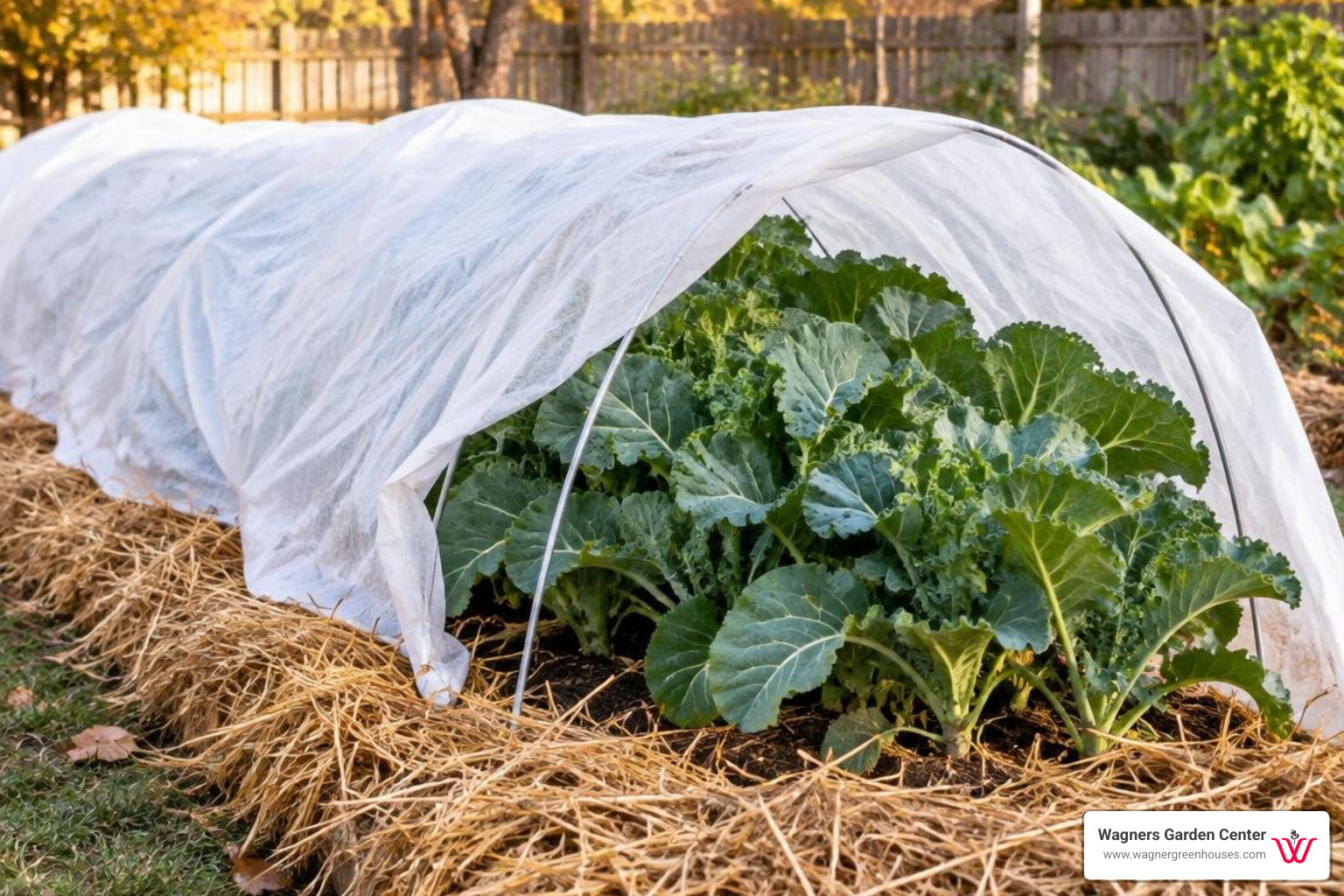
Installing Row Covers, Cold Frames, and Fabric Barriers
Physical covers trap radiant heat rising from the soil, creating a warm microclimate around foliage. When establishing frost barriers:
- Use Spunbond Polyester Fabrics: Medium to heavyweight agricultural row covers (frost blankets) provide 4°F to 8°F of freeze protection. They allow air and moisture penetration while preventing frost crystals from making direct contact with plant leaves.
- Install Support Hoops: Always support fabric covers with wire hoops, PVC conduit, or wooden stakes. If frost-protection fabric rests directly against wet foliage, freezing moisture will transfer through the material, causing contact burn on the leaf tips.
- Anchor the Edges Completely: Secure cover edges to the soil using landscape staples, heavy stones, or soil bags. Gaps allow cold autumn winds to lift the fabric and dissipate trapped ground heat.
- Avoid Impermeable Plastic: Never drape clear or black painter’s plastic directly over plants without a buffer. Plastic conducts freezing temperatures directly into foliage and causes rapid heat buildup and scalding when the sun emerges the following morning. For a complete guide to cold-weather landscape shielding, see our advice on fall gardening and preparing for winter.
Deep Mulching and Pre-Freeze Watering Strategies
Soil moisture and surface insulation work together to protect root zones:
- Irrigate Before the Freeze: Water your late-season garden beds thoroughly 24 to 48 hours before an anticipated freeze. Moist soil possesses a substantially higher heat capacity than dry soil, absorbing heat during the day and radiating it upward around plants overnight. Hydrated plant cells also resist frost damage far better than drought-stressed cells.
- Apply Deep Mulch Over Root Crops: Place a 4-to-6-inch layer of clean straw, shredded hardwood mulch, or pesticide-free chopped autumn leaves directly over carrot, beet, and parsnip beds. This insulating blanket prevents the top few inches of topsoil from crusting and freezing, extending your root harvest well into late fall.
Clearing Frost-Damaged Beds and Protecting Soil This Week
As freezing temperatures hit Minneapolis and Hugo, taking immediate steps to clean up vulnerable garden patches protects remaining healthy crops and keeps the soil shielded.
Immediate Clean-Up for Frost-Damaged Plants
Once tender crops have been harvested or touched by a hard freeze, prompt removal prevents lingering pest and disease problems:
- Clear Damaged Residues: Pull out collapsed tomato vines, mildewed squash foliage, and spent annual crops before freezing precipitation mats them into the ground.
- Protect Bare Soil: Spread a 1-to-2-inch layer of finished compost or shredded mulch over cleared patches to prevent topsoil erosion and moisture loss during sudden freezes.
- Implement Immediate Clean-Up Steps: Review our advice on practical steps for seasonal fall clean up to keep your beds organized and sanitary as freezing weather sets in. For additional regional crop care strategies, consult the K-State Horticulture guidance on late-season crop management.
Frequently Asked Questions About Fall Frost and Crop Care
Can cool-season greens survive temperatures below 20 degrees?
Yes, certain mature cool-season greens can survive drops below 20°F, provided the freeze is brief and plants are shielded with floating row covers or heavy mulch. Kale, collards, and spinach routinely survive temperatures in the 15°F to 20°F range. The primary requirement is that plants must thaw slowly; avoid handling or harvesting frozen greens while the foliage is rigid, as physical movement shatters frozen cell membranes. Allow midday sun to thaw the leaves before picking.
Should I water late-season garden beds before an incoming freeze?
Yes. Watering dry garden soil thoroughly 24 to 48 hours ahead of a hard freeze is one of the most effective ways to protect plant root systems. Wet soil holds and radiates heat more effectively than dry soil, buffering the root zone against sudden drops in temperature. Ensure the root zone is moist but well-drained, avoiding standing surface water that can freeze into solid ice sheets.
Should I harvest root crops before freezing temperatures arrive this week?
You do not need to rush to dig up all root crops before a light frost. Carrots, beets, turnips, and parsnips are naturally insulated by the soil, and cool nights enhance their sweetness. However, if a sharp freeze is forecast over the coming days, spread a 4-to-6-inch layer of straw or shredded leaves over the bed to keep the topsoil workable, or harvest what you need this week before hard freezes make digging difficult.
Conclusion
Preparing your late-season garden for upcoming frosts ensures you maximize the return on your gardening efforts. By promptly harvesting tender summer crops, installing protective row covers over cold-tolerant greens, deeply watering your beds, and applying insulating straw mulch, you can enjoy fresh, homegrown harvests well past the first freeze.
Whether you need high-grade frost fabrics, organic soil amendments, or expert advice tailored to local growing conditions, stop by our retail center to get your garden ready for the cold months ahead. You can explore seasonal supplies at our Minneapolis garden center to find everything you need for late-season garden success.